

Can You Pay Movers to Load a Truck in NYC?
Learn from U.Santini Inc. Moving & Storage about hiring movers specifically for loading a truck in New York City. Discover our quality moving services.
New York City stands as one of the world’s most iconic metropolises, home to 8.5 million residents spread across 302.6 square miles of urban landscape.
Yet what many people don’t realize is that this singular “city” is actually a federation of five distinct boroughs, each with its own character, culture, and identity. Understanding these boroughs isn’t just trivia for tourists; it’s essential knowledge for anyone considering a move to the Big Apple.
Whether you’re relocating from across the country or just a few neighborhoods away, choosing the right borough will fundamentally shape your New York experience.
From Manhattan’s towering skyscrapers to Staten Island’s suburban streets, each borough offers dramatically different lifestyles, housing costs, and daily realities.
Having helped New Yorkers navigate local and long-distance moves for close to a century, we understand that finding your perfect neighborhood starts with understanding the five boroughs themselves.
This comprehensive guide explores the history, demographics, neighborhoods, and living conditions across all five boroughs of New York City, helping you make the most informed decision for your next move.
The five boroughs of New York didn’t always exist as a unified entity. In fact, the modern structure of NYC only came into being on January 1, 1898, through a monumental event known as the Consolidation.
Before 1898, “New York City” referred exclusively to Manhattan and parts of what’s now the Bronx. Brooklyn was an entirely separate city, and the fourth-largest in the United States at the time. Queens was a patchwork of small towns and villages. Staten Island consisted of scattered rural communities. The Bronx had only recently been annexed to Manhattan in stages (1874 and 1895).
The consolidation movement was championed primarily by Andrew Haswell Green, often called “The Father of Greater New York.” Green envisioned a unified metropolis that could compete with rapidly growing Chicago for the title of America’s largest city. The consolidation required referendums in all affected areas, passing by an incredibly narrow margin of just 277 votes.
When the consolidation became official on New Year’s Day 1898, New York City instantly became the world’s second-largest city with a population of 3.4 million. The new structure created five boroughs, each coextensive with a New York State county:
This administrative structure has remained essentially unchanged for over 125 years. However, debates about borough autonomy and even secession movements have periodically surfaced, most notably in Staten Island, where residents voted 65% in favor of secession in 1993. Still, the state legislature blocked the measure.
Manhattan needs no introduction. As the cultural, financial, and symbolic heart of New York City, this narrow island borough has defined the world’s image of NYC for generations. From the Statue of Liberty to Times Square, Central Park to Wall Street, Manhattan contains more iconic landmarks per square mile than perhaps anywhere else on Earth.
Manhattan is organized on a clear grid system north of Houston Street, with numbered avenues running north-south and numbered streets running east-west. This makes navigation surprisingly straightforward once you understand the logic. Below Houston Street (pronounced “HOW-ston” by locals), the street layout becomes more organic, with neighborhoods like the West Village and Lower East Side featuring charming, winding streets that predate the grid.
The island measures approximately 13.4 miles long and 2.3 miles at its widest point. It’s divided into three broad sections: Downtown (below 14th Street), Midtown (14th to 59th Streets), and Uptown (above 59th Street). However, these boundaries are fluid, and Manhattan’s true identity lies in its dozens of distinct neighborhoods.
Manhattan’s most affluent residential area, stretching from Central Park to the East River and from 59th to 96th Streets. This neighborhood is home to Museum Mile, including the Metropolitan Museum of Art, the Guggenheim, and the Neue Galerie. The Upper East Side has traditionally been associated with old money, prestigious private schools, and doorman buildings.
The area offers a quieter, more residential feel than other parts of Manhattan, with tree-lined streets and elegant pre-war architecture. Families are drawn here for the excellent schools and proximity to Central Park, though rental prices reflect this desirability.
Mirroring the Upper East Side but with a more liberal, artistic reputation, the Upper West Side runs from Central Park to the Hudson River and from 59th to 110th Streets. Home to Lincoln Center, the American Museum of Natural History, and Columbia University, this neighborhood has long attracted intellectuals, artists, and families.
The architecture here is equally impressive, with grand pre-war buildings offering views of either Central Park or the Hudson River. Zabar’s, Barney Greengrass, and other longtime institutions give the neighborhood its distinct character.
These intertwined neighborhoods south of 14th Street represent classic New York bohemia. With their cobblestone streets, brownstones, and Washington Square Park, the villages (as locals call them) offer a human-scaled alternative to Midtown’s canyon-like feel.
The area has a rich history as a center for artists, writers, and LGBTQ+ culture. Today, it’s home to New York University and remains one of Manhattan’s most desirable and expensive residential areas. Small boutiques, jazz clubs, and independent restaurants line the streets, maintaining the neighborhood’s unique character despite rising rents.
Grungier and more affordable than its western counterpart (though prices have risen dramatically), the East Village between 14th Street and Houston Street has been the epicenter of punk rock, counterculture, and immigrant communities for decades. Tompkins Square Park serves as the neighborhood’s heart.
This area offers a younger vibe with dive bars, ramen shops, and vintage stores. It’s particularly popular with recent college graduates and young professionals seeking Manhattan living without Upper East Side prices.
The Lower East Side was historically the first stop for immigrants arriving in America, and that diversity continues today. Chinatown remains a vibrant ethnic enclave with authentic cuisine and shopping. The Lower East Side has gentrified considerably, but still maintains pockets of its immigrant heritage alongside trendy cocktail bars and boutiques.
The southern tip of Manhattan has transformed from a purely commercial area into a mixed-use neighborhood with a growing residential population. Battery Park City, built on landfill in the 1970s and 80s, offers parks, waterfront access, and a surprisingly suburban feel within Manhattan.
The area is quieter on weekends but offers easy access to ferries, the 9/11 Memorial, and numerous subway lines. Rents here can be more affordable than in Midtown or Uptown.
While primarily commercial, Midtown (roughly 34th to 59th Streets) does have residential areas, particularly on the eastern and western edges. This is where you’ll find Grand Central Terminal, Penn Station, Times Square, and Rockefeller Center, the New York of tourist imagination.
Living in Midtown means accepting constant crowds and tourist activity in exchange for unparalleled access to transportation, restaurants, and entertainment.
Upper Manhattan, above 110th Street, offers more affordable rents and a strong sense of community. Harlem has undergone significant gentrification in recent decades, but maintains its historic role as a center of African American culture. Washington Heights, the northernmost neighborhood in Manhattan, has a large Dominican and immigrant population and provides some of Manhattan’s last remaining affordable housing.
Manhattan offers the ultimate urban experience: 24-hour everything, world-class restaurants, museums, entertainment, and unmatched public transportation. The subway system centers on Manhattan, making it easy to reach any part of the city.
However, this convenience comes at a cost. Manhattan consistently ranks as the most expensive borough, with median one-bedroom rents ranging from $3,500 in neighborhoods like Washington Heights to $5,000+ in the West Village or Upper East Side. Apartments are typically smaller than comparable units in outer boroughs, and parking is prohibitively expensive or nonexistent.
Manhattan attracts young professionals, wealthy families, students, and anyone willing to pay a premium for being in the center of it all. The pace is fast, the energy is high, and the cultural opportunities are endless.
Brooklyn is where Manhattan residents move when they want more space, lower costs, and a different vibe. Once an independent city that reluctantly joined the consolidation in 1898, Brooklyn has maintained its fierce independence and experienced explosive growth over the past two decades.
Today, Brooklyn is synonymous with artisanal culture, craft brewing, street art, and a creative energy that has surpassed Manhattan’s. The borough is incredibly diverse both ethnically and socioeconomically, with neighborhoods ranging from ultra-wealthy Brooklyn Heights to working-class neighborhoods in southern Brooklyn.
The poster child for Brooklyn’s renaissance, Williamsburg transformed from an industrial area to the hippest neighborhood in NYC during the early 2000s. Today, it’s a mix of artists, young professionals, and families, with the Bedford Avenue L train stop serving as the neighborhood’s hub.
Williamsburg offers fantastic food, live music venues, waterfront parks with Manhattan skyline, and easy access to Manhattan via the L train or East River ferries. However, its popularity has driven rents close to Manhattan levels.
These adjacent neighborhoods along the Brooklyn waterfront offer stunning views, historic architecture, and residential tranquility. DUMBO (Down Under the Manhattan Bridge Overpass) has transitioned from industrial warehouses to luxury lofts and tech offices. Brooklyn Heights features beautiful brownstones, Brooklyn Bridge Park, and the famous Promenade.
Both neighborhoods attract wealthy professionals and families willing to pay premium prices for space and amenities while maintaining easy access to Manhattan.
Centered around Prospect Park (Brooklyn’s answer to Central Park), these neighborhoods have become family central. Park Slope’s brownstone-lined streets, excellent public schools, and community feel make it perennially popular with parents.
Prospect Heights offers proximity to the Brooklyn Museum, the Brooklyn Botanic Garden, and Barclays Center. Both neighborhoods have strong retail corridors with independent shops and restaurants.
Often called the “next Williamsburg,” Bushwick offers lower rents, larger apartments, and a grittier aesthetic. The neighborhood is famous for street art, DIY venues, and an active nightlife scene. It’s popular with artists and recent college graduates.
While the M train and L train provide connections to Manhattan, commutes are longer than from northwestern Brooklyn. However, for those prioritizing space and affordability, Bushwick remains attractive.
Southern Brooklyn neighborhoods like Bay Ridge and Sunset Park offer a more suburban feel with row houses, ethnic diversity, and multigenerational families. These areas have strong immigrant communities (particularly Chinese, Latino, and Middle Eastern), authentic international cuisine, and lower rents than northern Brooklyn.
These central Brooklyn neighborhoods have seen significant change in recent years. Crown Heights is known for its Caribbean culture and the West Indian Day Parade, while Bedford-Stuyvesant (often called Bed-Stuy) is one of the largest African American communities in the country.
Both neighborhoods offer beautiful historic architecture, growing arts scenes, and more affordable rents, though gentrification has been contentious issue.
Brooklyn offers more space for your money than Manhattan, stronger neighborhood identities, and thriving local scenes. Many Brooklyn neighborhoods feel like small towns within the big city, with residents developing deep connections to their particular area.
The tradeoff is that subway access isn’t as comprehensive as in Manhattan. While neighborhoods along the L, A/C, and F trains have easy access to Manhattan, other areas require longer commutes. Many Brooklyn residents rarely go to Manhattan except for work, preferring to stay local.
Brooklyn’s food scene rivals Manhattan’s, craft breweries dot every neighborhood, and Prospect Park provides excellent green space. It’s ideal for those who want big city amenities without quite as much intensity as Manhattan.
Queens is New York City’s most diverse borough, and possibly the most diverse place on Earth. Over 160 languages are spoken here, and residents hail from virtually every country. This diversity manifests in extraordinary food scenes, cultural festivals, and neighborhood character.
Queens is also the most suburban-feeling borough while still being firmly part of NYC. Tree-lined streets of single-family homes coexist with high-rise apartment buildings, and many areas offer a quality of life difficult to find elsewhere in the city at comparable prices.
Long known for its Greek community, Astoria has become increasingly diverse and popular with young professionals seeking easier rents than in Brooklyn or Manhattan. The N and W trains provide direct access to Midtown in about 20 minutes.
Astoria offers an incredible restaurant scene spanning Greek, Brazilian, Egyptian, Mexican, and more. Astoria Park along the East River provides waterfront space and recreation facilities. The neighborhood has a young, vibrant energy without the hipster posturing sometimes found in Brooklyn.
Directly across the East River from Midtown Manhattan, Long Island City (LIC) has experienced massive development over the past two decades. Modern high-rise apartments with Manhattan views have transformed former industrial areas.
The neighborhood offers the shortest commute to Midtown of any non-Manhattan location, making it popular with professionals. MoMA PS1, Gantry Plaza State Park, and growing restaurant options add appeal, though some criticize LIC for feeling corporate and lacking neighborhood character.
One of the most ethnically diverse neighborhoods in the world, Jackson Heights is home to large South Asian, Latin American, and LGBTQ+ communities. The area offers incredible food at reasonable prices, historic garden apartment buildings, and a strong sense of community.
Roosevelt Avenue, the main commercial corridor, features restaurants, shops, and services catering to a diverse range of cultures. For food enthusiasts, Jackson Heights is paradise.
These central Queens neighborhoods offer a more suburban feel with detached houses, good public schools, and lower density. Forest Hills, in particular, has beautiful Tudor-style architecture and Forest Hills Gardens, a planned community from 1909.
The area attracts families and older residents seeking stability, good schools, and homeownership opportunities.
The center of NYC’s Chinese community (rivaling Manhattan’s Chinatown), Flushing offers authentic Chinese, Korean, and other Asian cuisine and shopping. The neighborhood has seen massive development with new high-rise buildings.
Flushing is less accessible to Manhattan (40-60 minute commute) but offers a complete neighborhood with all amenities, competitive rents, and the ability to live entirely within the Chinese community if desired.
The only beachfront neighborhoods in NYC proper, the Rockaways offer beach living within city limits. Surfing, beach bars, and a laid-back vibe attract summer visitors, though year-round residents deal with long commutes (60-90 minutes to Manhattan) and limited local amenities.
Queens offers the best value proposition in NYC for those willing to accept longer commutes. You get more space, lower costs, and incredibly diverse cultural experiences. The borough feels less frantic than Manhattan or even Brooklyn, with a stronger residential character.
The main drawback is transit access, while areas near the 7, E/F/M, N/W, or R trains have reasonable Manhattan commutes, many parts of Queens are subway deserts requiring buses. This makes Queens less appealing for those who need to be in Manhattan frequently but ideal for families, remote workers, or those whose jobs are in Queens.
Homeownership is actually achievable in Queens for middle-class families, unlike in Manhattan or most of Brooklyn. This stability creates strong neighborhood ties and multigenerational communities.
The Bronx is the only borough connected to the US mainland, and it’s the birthplace of hip-hop. Often overlooked by newcomers to NYC, the Bronx offers significant advantages: affordable rents, massive parks, world-class cultural institutions, and improving neighborhoods.
The Bronx has faced economic challenges since the 1970s, when “the Bronx is burning” became a national narrative. However, significant investment and community development over the past two decades have revitalized many neighborhoods, though challenges remain in some areas.
The Bronx’s wealthiest neighborhood, Riverdale, feels more like a suburb than part of NYC. Located along the Hudson River in the borough’s northwestern corner, Riverdale features hills, trees, private homes, and excellent private schools.
The neighborhood offers peace and nature while remaining within city limits. However, it’s far from Manhattan (45-60 minute commute) and has limited local shopping or nightlife.
Home to Fordham University, this neighborhood offers college-town energy with diverse dining options. The New York Botanical Garden and Bronx Zoo are nearby, providing world-class green space.
Fordham is more affordable than many NYC neighborhoods while offering good transit access to Manhattan via the Metro-North railroad and subway lines.
The Bronx’s northeastern section includes Pelham Bay Park, NYC’s largest park at 2,772 acres (three times the size of Central Park). The neighborhood has a more suburban feel with lower density and cleaner streets than many Bronx areas.
Orchard Beach, the Bronx’s public beach, provides summer recreation. The area attracts families and offers some of the borough’s best quality of life.
Historically, by the birthplace of hip-hop and salsa, the South Bronx has struggled economically but is experiencing renewal. Yankee Stadium, one of sports’ most iconic venues, anchors the area. The Grand Concourse, a Parisian-inspired boulevard with beautiful Art Deco buildings, runs through the South Bronx.
The neighborhood is affordable but faces higher crime rates than other NYC areas. However, artists and young people are increasingly attracted to cheap rents and authentic culture.
A small island off the Bronx’s coast, City Island feels like a New England fishing village. With seafood restaurants, yacht clubs, and a maritime atmosphere, it’s utterly unlike the rest of NYC.
Reaching City Island requires crossing a single bridge, making it feel isolated. For those seeking a unique NYC experience, it’s worth exploring.
The Bronx offers affordability and space unavailable elsewhere in NYC at comparable price points. Parks and green spaces are abundant, with Pelham Bay Park, Van Cortlandt Park, and the Bronx Zoo providing world-class outdoor recreation.
The borough’s primary drawback is its reputation; fair or not, many New Yorkers still associate the Bronx with high crime and poverty. While many neighborhoods are perfectly safe and improving, some areas do face challenges. Researching specific neighborhoods is essential.
The Bronx also has less developed subway infrastructure than other boroughs, with trains primarily designed to funnel commuters into Manhattan rather than move within the Bronx itself. However, for those prioritizing affordability, family-friendly neighborhoods, and parkland, the Bronx deserves serious consideration.
Staten Island is the forgotten borough, the one even many New Yorkers rarely visit. Connected to the rest of the city only by the Staten Island Ferry (from Manhattan), one bridge to Brooklyn, and no subway connection, Staten Island feels less like NYC and more like a suburb that happens to have a NYC address.
This distinct character attracts families, homeowners, and those seeking a slower pace while remaining technically in the city. Nearly 70% of Staten Island residents own their homes, compared to just 30% citywide, a statistic that reveals much about the borough’s character.
The ferry terminal neighborhood, St. George, offers the easiest Manhattan access and the most urban feel on Staten Island. The borough’s government offices, cultural institutions, and developing waterfront are here.
St. George attracts those who want Staten Island’s affordability and space while maintaining some connection to city life. The free ferry ride to Manhattan provides stunning views and a 25-minute commute, though you must then transfer to a subway or other transit.
The southernmost point in New York State, Tottenville, feels like a small beach town. Historic homes, neighborhood restaurants, and proximity to beaches attract families seeking quiet suburban living.
However, Tottenville is extremely isolated; reaching Manhattan can take 90+ minutes door-to-door. This is a living space for those whose lives center on Staten Island itself.
Named for its Dutch word for “creek,” Great Kills offers access to Great Kills Park with beaches, trails, and recreation. The neighborhood has good schools and attracts families.
Like most of Staten Island, cars are essential here, and traffic getting on and off the island can be significant.
A middle-class neighborhood in the island’s center, New Dorp, offers shopping, dining, and residential stability. The area has a strong Italian-American presence alongside growing diversity.
Staten Island offers suburban living with a NYC address. You’ll get a house with a yard, driveway, and backyard pool, amenities unthinkable in other boroughs at comparable prices. Public schools are generally better than those in different boroughs, crime is lower, and neighborhoods are quiet.
The tradeoff is isolation. Without a car, Staten Island is nearly impossible to navigate. Getting to Manhattan requires either the ferry (with all its transfer inconveniences) or driving over the Verrazzano Bridge into Brooklyn (with tolls and traffic). Most Staten Island residents’ social lives center on the island itself.
Staten Island attracts families, particularly those priced out of homeownership elsewhere, and people whose jobs are on Staten Island or in New Jersey. It’s less appealing for young singles, public transit-dependent people, or those who need frequent Manhattan access.
The borough has the most politically conservative lean of any NYC borough, with strong firearm culture, police and firefighter communities, and more traditionally suburban American values. This creates a very different cultural feel from Manhattan or Brooklyn.
Understanding the five boroughs is essential, but choosing between them requires considering your personal priorities:
One crucial factor in choosing your borough is understanding how you’ll get around. The NYC subway system primarily centers on Manhattan, with lines radiating outward to the other boroughs. Some key points:
Express buses, commuter rail (Metro-North, LIRR), and ferries supplement subway access in some areas. However, anyone considering NYC must understand that proximity to subway lines dramatically affects quality of life and property values.
New York City’s population currently stands at approximately 8.478 million as of 2024, having recovered most of the pandemic-era losses. All five boroughs have seen growth return after 2020-2021 declines:
Looking forward, several trends are shaping the boroughs:
Whether you’re moving to NYC for the first time or relocating between boroughs, the logistics matter. Moving within NYC presents unique challenges: narrow staircases, building regulations, elevator reservations, parking restrictions, and tight streets all complicate the process.
For over a century, professional moving companies specializing in NYC have helped residents navigate these challenges. Understanding building rules, having proper insurance, knowing how to handle tight corners, and efficiently loading trucks make the difference between a smooth move and a nightmare.
When planning your move, consider:
Experienced local movers familiar with all five boroughs understand these nuances and can save time, stress, and potential damage to your belongings.
The five boroughs of New York City each offer distinct experiences under one municipal umbrella.
Understanding these differences helps you make informed decisions about where to live, work, and build your life in New York City. Each borough has strengths and weaknesses, and the “best” choice depends entirely on your priorities, budget, and lifestyle.
What makes New York City remarkable isn’t any single borough; it’s the combination of all five working together, the constant movement of people between them, and the endless variety of experiences available within a single city’s boundaries. Whether you choose the skyscrapers of Manhattan or the beach communities of the Rockaways, you’re part of the world’s most dynamic urban ecosystem.
For those planning a move within or to the five boroughs of New York, choosing experienced NYC moving professionals familiar with the unique challenges of each borough ensures your transition is smooth, efficient, and stress-free. After all, moving is complicated enough without navigating NYC’s streets, buildings, and regulations on your own.
The five boroughs await, which one will you call home?
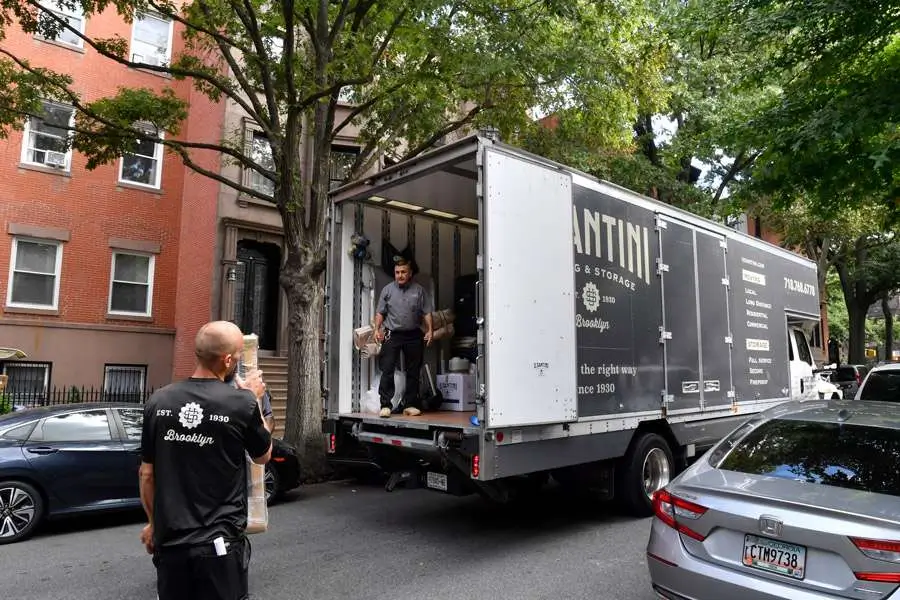
Learn from U.Santini Inc. Moving & Storage about hiring movers specifically for loading a truck in New York City. Discover our quality moving services.

Discover the benefits of hiring professional short-distance movers from U. Santini Inc. Moving & Storage. Contact us for a stress-free experience.
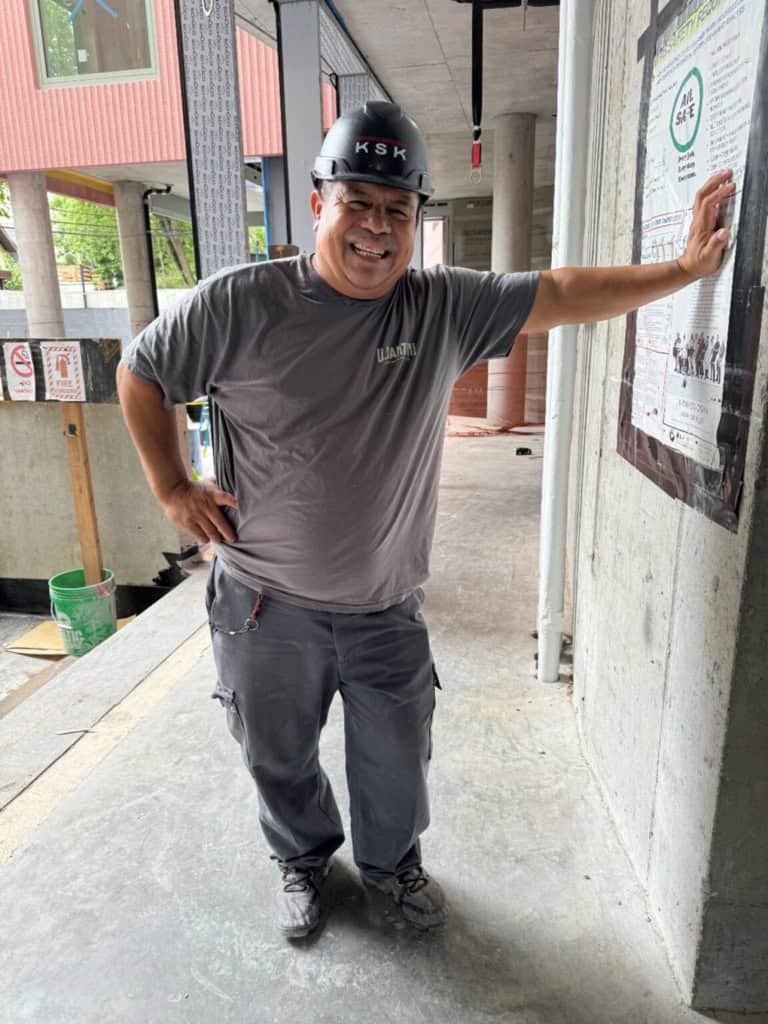
Explore a day in the life of a professional mover in Brooklyn, NY with U.Santini. Discover the challenges and rewards of this demanding profession.
